Packaging
Why is packaging a problem in Northern Ireland?
Packaging is one of the biggest contributors to waste in Northern Ireland, making up over 30% of all waste collected. Most packaging is designed for single use, and therefore quickly discarded after use. This creates major problems with waste management and littering.
A large proportion of packaging waste, around 60–70% is plastic. Much of this plastic is made from petroleum-based materials, meaning its production contributes significantly to CO₂ emissions, driving climate change and global warming.
Most plastic packaging is non-biodegradable. Once discarded, it can remain in the environment for hundreds of years, breaking down into microplastics that:
- harm wildlife through ingestion and entanglement
- pollute soil, rivers, and oceans
- pose growing risks to human health
Because packaging is lightweight and easily discarded, it is also one of the most visible forms of litter, damaging Northern Ireland’s towns, countryside, and coastline.
Is packaging a problem in Northern Ireland, and what action is being taken?
Research by Keep Northern Ireland Beautiful (KNIB) highlights the scale of the issue. Their 2022–2023 litter survey found:
- 12 million pieces of litter polluting Northern Ireland’s streets at any one time
- Just four producers account for 50% of all branded litter
- An estimated 400,000 plastic bottles littering streets across NI
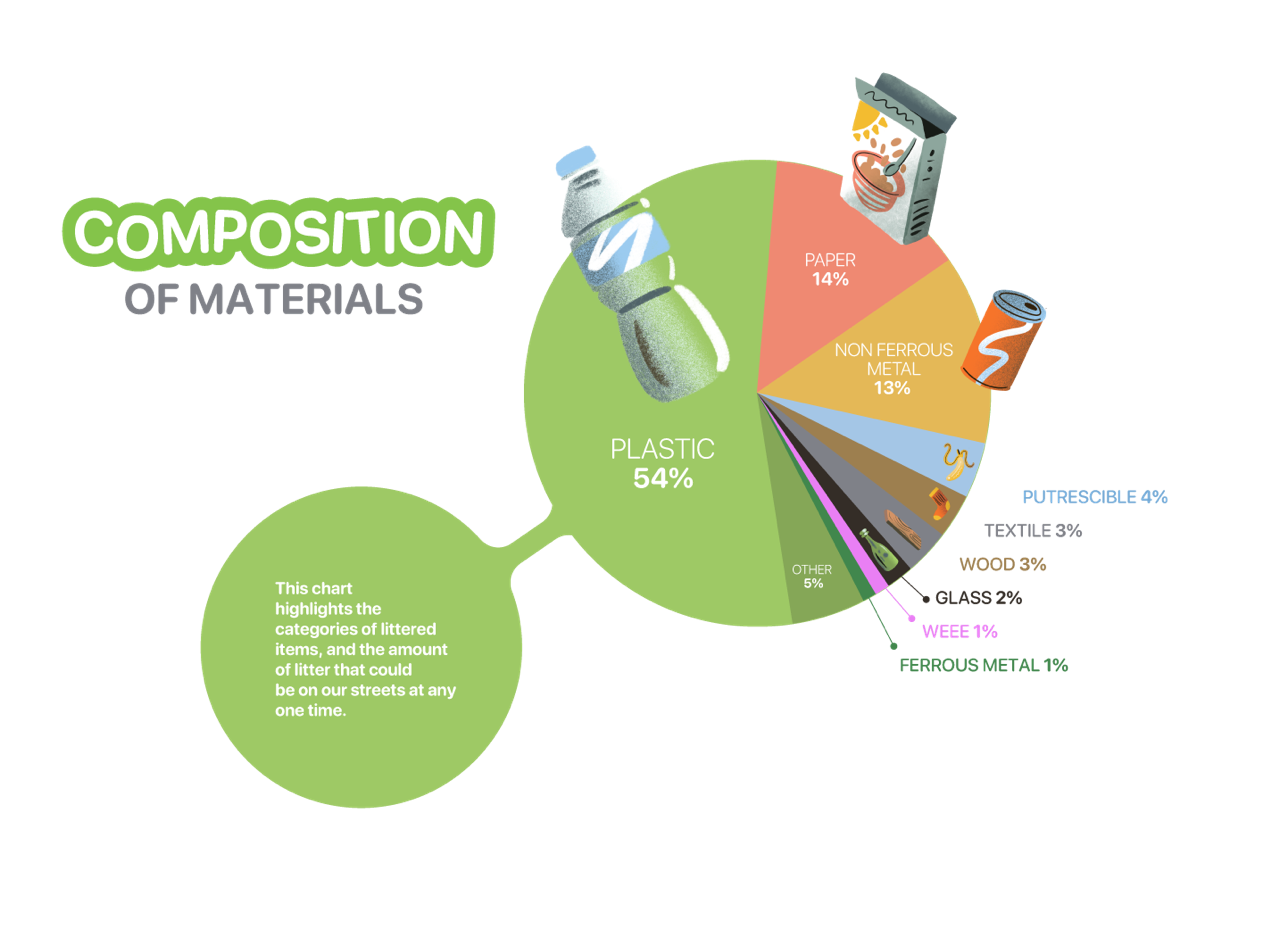
Packaging, especially plastic bottles, food wrappers, and takeaway containers, dominates litter counts.
Litter Composition Producer Report
Extended Producer Responsibility (EPR) for Packaging
Northern Ireland has recently introduced Extended Producer Responsibility (EPR) for packaging. Under EPR, producers are required to pay the full cost of collecting, recycling, and safely disposing of the packaging they put on the market.
This system is designed to:
- Encourage producers to reduce unnecessary packaging
- Promote the use of recyclable or reusable materials
- Shift financial responsibility from councils and taxpayers to producers
- Increase recycling rates and reduce littering
By making producers accountable, EPR aims to reduce packaging waste at the source and support a more circular economy, where materials are reused rather than discarded.
What can I do to reduce packaging waste?
Reducing packaging starts with everyday choices, but community action also plays a key role.
Everyone can take simple steps to reduce the amount of packaging they use and send to landfill. Some practical actions include:
- Use reusable cups and bottles
- Shop with refillable and reusable containers
- Choose products with less packaging
Bring your own shopping bags – take a cloth or reusable bag with you to avoid single-use plastic bags when you go shopping