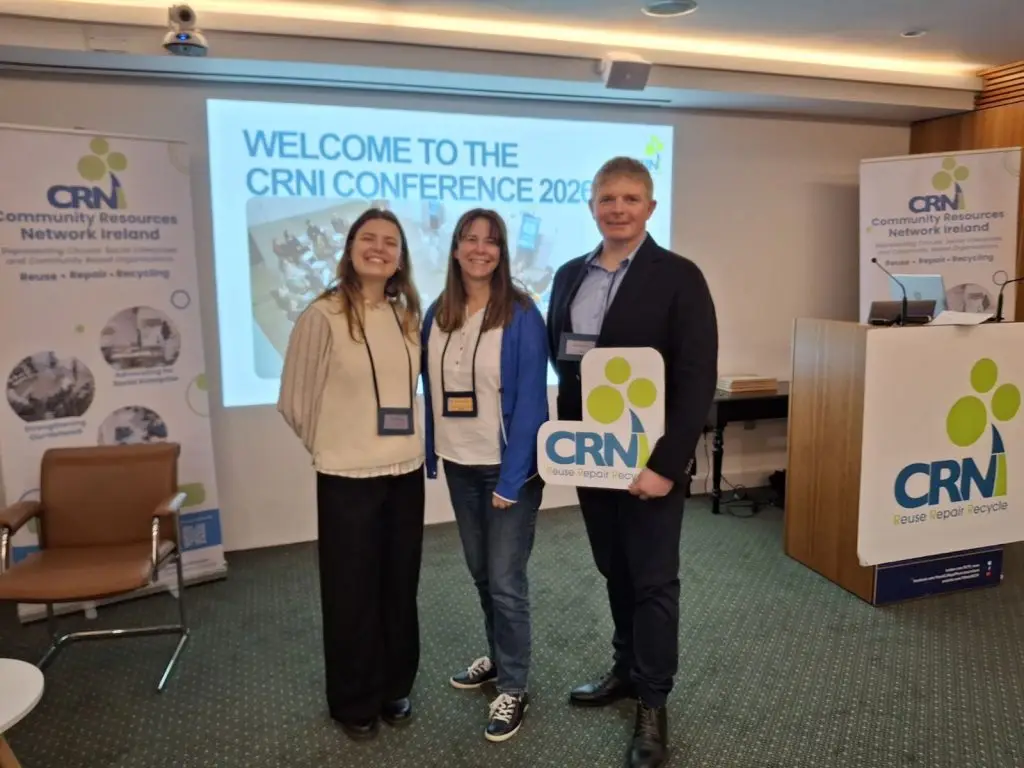
NIRN travelled south to attend the CRNI annual conference. As a Northern Ireland organisation, it was a valuable chance to connect with colleagues across the island and hear where reuse and circularity policy is heading.
We started with a great ice breaker. Each team was given reused clothes and textiles and had to dress a mannequin around a theme, while other teams guessed what it represented. Ours was “Apocalypse Now”. It got everyone talking and was a reminder of what creativity with reused materials can achieve.
The conference was encouraging. There is greater recognition from the Irish Government that reuse, repair and circularity are central to the ongoing economy. It was also good to see two organisations from the Community Resilience programme, which NIRN delivered in collaboration with CRNI, join CRNI as members: Creative Spark in Dundalk and Cranmore in Sligo.
The challenge facing the sector was clear too. Charity Retail Ireland’s impact report found around 1 million black bags of textiles that were not fit for sale, a drain on limited charity shop resources. https://lnkd.in/em8fTs7A
That pressure is why textiles Extended Producer Responsibility (EPR) matters so much.
A speaker from Emmaus Europe shared insights from the French textiles EPR scheme there, run by the PRO Refashion. The social economy does not currently have a voice in its governance or in how funding is allocated, despite its long experience of tackling textile waste. Around 5% of funding goes to reuse. This points to the value of giving the sector a seat at the table in Ireland from the start.
Our takeaway as EPR approaches in Ireland is simple: support what is already happening, rather than only funding new actors. The charity and social economy sector already collects, sorts, repairs and resells, and it should have a real voice in how EPR is designed and run. These lessons are just as relevant for us in Northern Ireland as policy develops here.